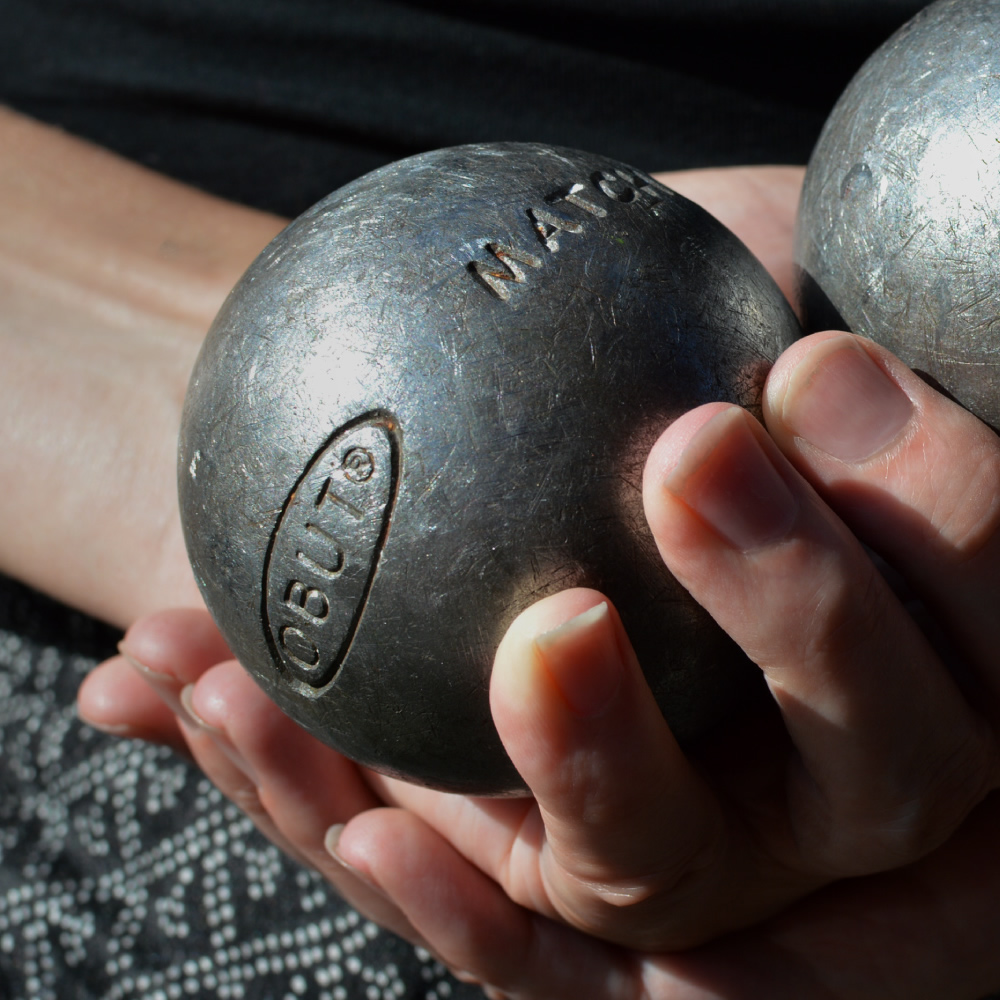
A good first session starts with an introduction rather than a bag of new equipment. Ask the host whether you can borrow boules and watch an end before joining in. Notice the small target ball, called the jack or cochonnet, and the circle players throw from. You will learn the order of play faster with a friendly partner than by trying to memorise a rulebook on the way to the club.
Learn the rhythm of an end
Watch which team has the boule closest to the jack and who throws next. When an end finishes, wait before collecting anything. Players may still need to compare the nearest boules or agree the score. Ask someone to show you where to stand while others throw and how the club handles a close measure.
Give your pointing throw one job
Pick a patch of ground where you want the boule to land. Let it roll towards a short target and watch what happens after the bounce. If it runs past, try a spot slightly nearer to you before altering your grip or speed. Repeat on the same patch so you can tell whether the change helped. This is a practice idea you can try with a teammate or on your own.
End before the practice gets muddled
Finish with a short game or a handful of throws at the same target. Keep one observation for next time. Perhaps the boule rolled further than you expected on packed gravel, or you improved when you stopped looking at the jack during the release. Ask the club about coaching or another beginner-friendly session before you leave.
Work out what to bring before you buy anything
Ask the club whether it has boules to borrow and whether it expects visitors to bring their own jack or measure. Borrowing a set for the first visit gives you a chance to see how the game feels on that venue’s surface. You can ask which equipment is permitted if you later want to enter a formal competition. For an ordinary outdoor visit, comfortable, secure footwear and a layer for standing still are more useful than an impressive equipment bag. Tell the organiser about access needs in advance so they can explain how to reach the playing area.
Watch one end from a useful position
Stand where a club member suggests and watch the order of decisions. Look for the circle, the jack and the boule that currently holds the point. Notice who waits, who asks their partner about the next shot and when people move up to inspect the lie. You do not need to keep the running score from memory on your first visit. Try saying to yourself which side is closer. If you cannot tell, see how the others agree whether to measure, and keep the area clear until they finish.
Practise picking a place to aim
Take a few throws towards a wide landing area on an empty practice lane. The purpose of the first set is simply to find where your boule touches down. A teammate might mark the spot with a harmless visual cue in practice or call out where the first bounce landed. Leave the match terrain alone unless a rule or official permits an adjustment. Once your first bounce is within sight of the intended area, pay attention to what the roll does. You can alter the landing aim and try again without changing several details of the grip and stance at once.
Join a game without knowing every rule
Ask your partner to explain what you are trying to achieve on each of your first few turns. They might say “get one safely in front” or “try the clear edge of the lane.” Take a moment to look at the target and confirm what they mean. When nobody is certain what comes next, ask someone who regularly plays at the club. It is normal for a new player to need help deciding when to step into the circle. Allow others to finish their turns and avoid crossing an active lane to retrieve your own boule.
Use a small success as the starting point for next time
A useful result may be that you can tell where the boule landed, remember which team plays next or choose a line you feel comfortable throwing. Note what worked along with the conditions. “Low throw ran further on the dry middle track” is easier to use next week than “need to get better.” Take one question to a club session or coaching visit. You could ask a partner how they identify a patch that would slow the boule, or how to check a close score. Learning one piece at a time makes the next end easier to follow.
Three questions that are reasonable to ask
- Can a visitor try a session without committing to a competition? Ask about the club’s visitor arrangements and the next suitable session before you travel.
- Is there somewhere I can stand to watch safely? Ask for a place that does not distract the thrower or block the route between pistes.
- How do I know when the end is over? Wait for the players to agree the score and check that nobody still needs to measure before picking up the boules.
If your first club visit is interrupted by weather or a busy competition, try an advertised social or coaching session later. A quieter ground gives you room to ask questions without everyone waiting to start a formal round.
Find a club that welcomes first-time players
The story of how Trafford Pétanque got started describes two players inviting passers-by to try the game in a local park. When you contact a club, ask whether a regular social session has time for an introduction and whether anyone can lend you a set. Ask where to meet and when to arrive so someone can show you a throw before games begin.