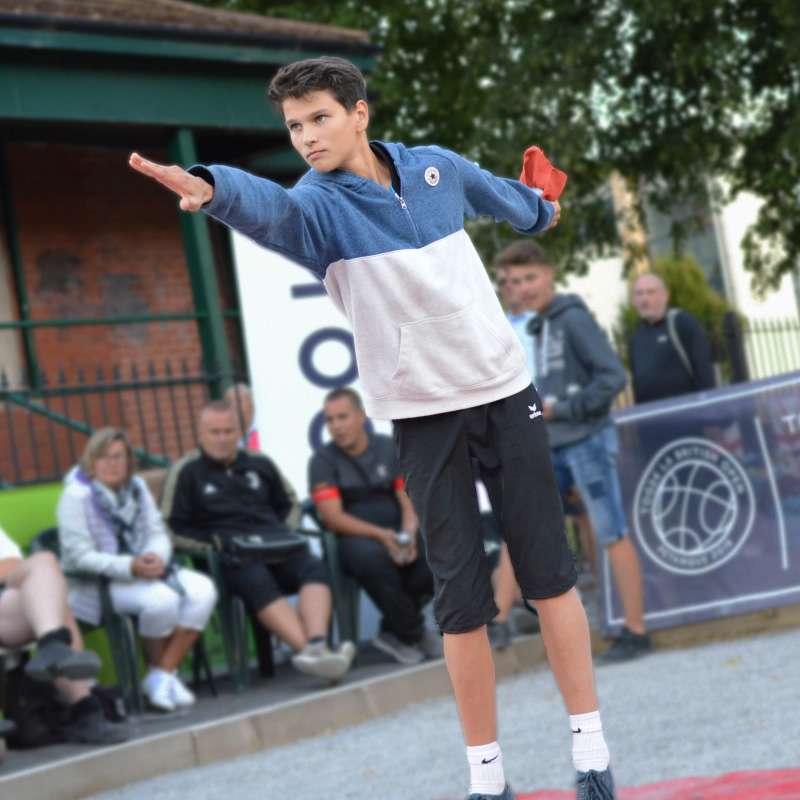
The most useful shooting session is one where you can describe what the missing shots had in common. If you change the distance and target after every attempt, a hit is satisfying but tells you little. Put a spare boule on an empty practice lane, stand at a comfortable distance and take a few warm-up throws. Tell those nearby which lane you are using before you start.
Set a steady target and count the attempts
Start with a single target boule and a small batch of throws. Record a direct hit separately from a bounce before the target and a wide miss. You need the number of attempts to compare sessions. Five hits in a long practice tell a different story from five hits in a short block. Use your own baseline and repeat roughly the same conditions the next time.
Locate the pattern in the misses
If a group lands consistently short, check whether you rush at the point of release or whether the chosen distance is simply too demanding for the drill. A consistent error gives you one thing to test. If the misses spread everywhere, make the task easier and keep the rhythm steady. A club coach can observe your movement during the throw and help you identify what changes between attempts.
Keep a clear finish to the session
Finish the block while the remaining throws still resemble the first few. If your grip tires or the trajectory changes substantially, make a note rather than adding a long series to lift the score. On a future visit, try one distance change after the baseline. Reserve simulated pressure for another block where you can choose a shot with a clear reason.
Give a shooting block a clear start and finish
Choose a lane with nobody standing in the direction of the target or walking through the space behind it. Put the target boule where you can replace it after every attempt. Start close enough to make the same relaxed throw several times. Agree with a partner when to collect the boules, especially if several people are practising nearby. A useful first set should let you observe your release without the pressure to attempt the most demanding distance. Move the target only after you have something comparable to look at.
Group the misses by what you saw
Make a simple record for each attempt. A direct hit, a first bounce short of the target and a wide landing tell you different things. Add the direction when you can see it. If several throws produce a similar first bounce just short, ask a partner to check whether your release changes at that distance. If they vary widely and you cannot point to a consistent cause, reset to an easier distance before you try a new technique. Try to keep one observation per throw so that taking notes does not interrupt the rhythm.
Split practice between contact and a usable outcome
There are ends where moving the target is enough, and others where what remains on the piste matters as much as the hit. Set up a practice example with one target boule by the jack and another where a hit could free an opponent’s line. You might count contact in the first block and then record the positions of the boules after contact in the second. Do not treat a contact result as proof that you have solved the crowded end. Notice which finishes would have been useful if there were still more boules to play.
Make one change you can compare
After the opening set, pick one cue, a shorter distance or a clearer visual target. For example, ask a partner to notice whether you reach full balance before starting your throw. Use the same piste and target for the comparison as far as possible. After a few attempts, take a brief break and see whether you can return to the original version. If the new movement feels unfamiliar or hard to repeat, take that as useful information, even if one of the new attempts hit cleanly. You can ask a coach to look at the movement across several sets.
Decide when shooting fits the end
Before attempting a shot in a game, look at what a normal miss would leave as well as what a hit could do. If a useful point is still available, it may avoid moving the jack into a worse position. If a target boule closes every useful landing route, shooting may give the team room to play. Discuss the aim while the thrower is outside the circle. A sentence about the outcome helps all players understand why they chose the shot if the next boule changes the lie.
Record enough to plan the next visit
Keep the distance, surface, attempts, the main miss pattern and how the session ended. Add a note if a change in the wind, footing or your throwing rhythm interrupted the comparison. On another day, repeat the first set while you are comfortable, then test one change. There is value in recording a point at which the throws stopped resembling one another. It helps you keep practice organised around deliberate attempts instead of banking many extra throws without feedback.
When you next play a match, remember a short cue from the block and let the team choose its normal safety and tactical checks. A familiar practise setup is a way to rehearse the delivery. The decision about when to use it still depends on the actual end.