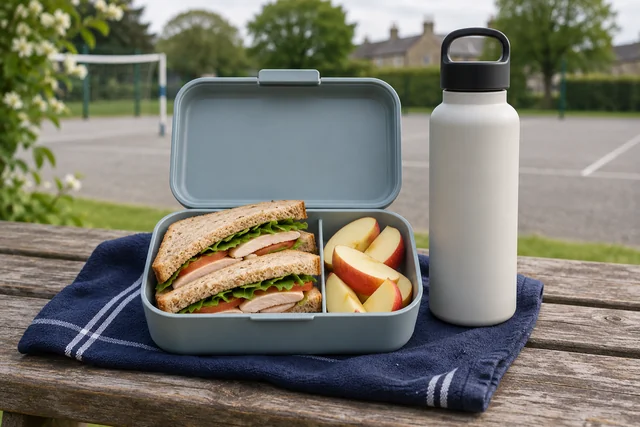
Players often pack food for a single, predictable break and then discover that lunch happens in two short pauses. Bring food you can eat in stages. Think about carrying it, where you will wash your hands and whether there is somewhere cool to leave it. An ordinary meal you are comfortable eating is a better starting point than a new product chosen on the morning of play.
Decide what needs to stay chilled
Follow the storage instructions on the food you bring. If it needs refrigerating, take a cool bag with suitable ice packs and keep it out of direct sun. Open it only when you need something. An unopened, shelf-stable option can be a good backup when the day runs late or you cannot keep food chilled reliably. Take a separate bag for rubbish.
Pack a small option and a larger one
A banana or crackers are easy to take out between games. A sandwich, a filled wrap or a packed grain dish can fit a longer pause when you have somewhere to sit. Include water and put the small snack where you can reach it without unpacking your main meal. If you have allergies or other dietary needs, keep your own food clearly identifiable and check the facilities ahead of time.
Test what you will actually want to eat
At a club practice, try the lunch you intend to take and decide what is awkward about eating it. You might need a smaller container, an insulated bottle or a less messy filling. Use the result to make a list for event days. That list saves time without turning every meal into a performance calculation.
Choose food for the breaks you actually get
Read the schedule as a series of chances to eat. A ten-minute gap in which you must confirm the result, cross the site and check the next fixture is a time for a quick drink and a few bites. Use a dedicated lunch interval for the larger meal. If there is no official lunch break, pack items you can use across two pauses without keeping an opened portion in your bag for hours.
A dry-weather plan for a local league morning might be a whole apple, crackers and a labelled shelf-stable snack for the short gap, with a sandwich from a well-chilled lunch bag after the last game. A full day away from shops might need a familiar second food option and more water capacity, with a planned refill location. Let portion size reflect what you already eat during a similar day.
Make two different versions before shopping
For a chilled version, start with clean, pre-chilled containers and include something familiar such as a prepared wrap or pasta salad, fruit and a sealed drink. Put frozen packs around the refrigerated contents and close the cooler after opening. Put a drink you will use repeatedly outside the food compartment so that opening it for a sip does not repeatedly warm the lunch. Keep the cooler shaded and bring it out of a hot parked car when you arrive.
For a version that avoids a cooler, select products specifically labelled for storage at room temperature, an uncut fruit you can wash before leaving, and a clean bottle. A shelf-stable item may need refrigeration after you open it, so check the label and choose portions you will finish at one sitting. Leave room for a backup snack that will survive being carried through several rounds. If you have no safe way to store a food that ordinarily needs refrigeration, choose a shelf-stable option or plan to buy a meal locally.
Build a small station away from the boule bag
Give the meal its own compartment. Put food containers upright and separate them from equipment that has touched the terrain. Pack a utensil and a little bag for wrappers. Clean hands before preparing and eating, and check where handwashing is available. Scrabbling on a gravel surface for a fork that fell through a torn wrapper is easily avoided by packing utensils in a clean pouch.
An insulated bag with an interior you can wipe out is easier to organise if its pockets have one purpose each. Front pocket for sealed dry snacks, main compartment for chilled lunch, bottle outside. Arrange the food you will eat first where it opens without rearranging everything. Know which pocket contains waste if the next lane is a walk from the bins.
Make shared food easy to identify
For a shared team lunch, leave packaged food in the original labelled packaging and keep home-prepared dishes clearly identified. A person with an allergy needs accurate ingredient information and may prefer to bring their own food. Do not guess about ingredients in an unmarked pot or use the same serving utensil across dishes when cross-contact is a concern. Let the person with the dietary requirement decide which option is suitable.
Check whether your venue has a place for spectators and players to eat without crossing active lanes. If a teammate needs a seat at meals, name the table or shaded bench when you tell them the plan. A location everyone can reach makes it easier for the group to finish lunch inside the time available.
Use the leftovers as feedback
On the way home, look at what remained unopened and what ran out. If you repeatedly carried a large chilled meal through every short gap, pack two smaller portions next time. If the only available refill had a queue and you missed the restart message, make the route to water part of your arrival check. Change the problem that actually happened. Keep familiar choices when they kept you comfortable and fitted the intervals.