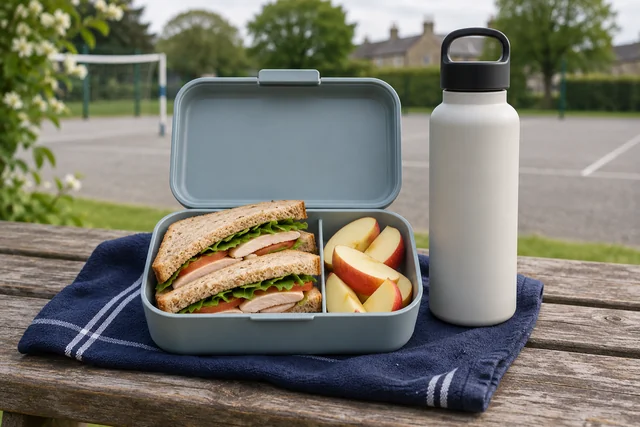
A club practice and a tournament day ask different things of your bag. At practice you can usually eat at home before or afterwards. At a tournament, a match can run past lunch and the next round may start with very little warning. Work out where you can refill a bottle, whether food is available near the piste and what you can eat during a short break.
Keep the food familiar
For the meal before play, pick something you have eaten comfortably on an ordinary practice day. Toast, porridge or a sandwich can give you familiar carbohydrate foods. Include the foods that normally make the meal satisfying for you, such as yoghurt, eggs, beans or another protein source. On a long day, pack a snack you can eat between matches and a more substantial option for a proper break. The NHS Eatwell Guide describes the food groups you can use to plan meals.
Think in terms of the timetable. A sandwich can cover lunch if you know you have time to sit. A banana, crackers or dried fruit can be easier to manage while draw sheets are being updated. Bring a little extra if you will be on site all day and the café may close before the last games. If you carry perishable food, keep it chilled and follow the storage instructions on the pack.
Take the conditions into account
Keep water within reach and use breaks to drink. Heat, humidity, your time outside and how much you sweat can change your needs. A sports drink can supply fluid and carbohydrate together in some situations. For straightforward club sessions, familiar food and water are useful starting points. If you regularly compete in heat or have been told to limit your fluids, get advice suited to your circumstances. Read the Australian Institute of Sport guide to sports drinks.
- Before you leave. Check the weather and the facilities. Fill your bottle and pack a practical snack as well as lunch.
- Between games. Use the time you have. Take a drink, eat something manageable if you are hungry and set aside the larger meal for a longer pause.
- After the last ends. Make time for a meal with carbohydrate, a protein food and a drink. If you have a long trip home, put a fallback snack in your bag before you leave.
Test the plan on a practice day
Try the food and drinks you intend to take to an event on a day with a similar start time. Notice whether you get hungry before you expect to, whether food sits comfortably and whether you can access your bottle while you are playing. Use what you learn to adjust the next day’s plan. A registered sports dietitian can help if you regularly struggle to eat or drink enough around competition. See the UK Sports Institute’s nutrition advice for athletes and the Australian Sports Commission’s recovery evidence summary.
Build a plan for three different breaks
For a ten-minute gap, pack something easy to reach and a bottle you can refill. A snack divided into small portions helps if the next round is called earlier than expected. For a longer break, bring the food you would ordinarily eat at that time of day. Make sure you have a place to sit and time to eat it. For the journey home, keep a spare option available in case the final match or travel takes longer. A single large meal often fits only one of those situations.
Keep food safe as the day warms up
Find the storage instructions for what you are taking. Use a suitable cool bag and ice packs for food that needs to stay chilled, keep the bag in shade and take out only what you need. If the venue has limited facilities, an unopened, shelf-stable item can be a useful backup. Store the bottle and small snack where you can reach them without opening the cool bag every time. Tell teammates if food needs to be kept separate because of an allergy.
Turn a practice day into a packing test
Picture a noon start with a first break you cannot predict. Eat your usual meal at home, pack a small snack separately and take a lunch you could stop and eat halfway through. At the club, notice which food gets squashed, takes too long to open or leaves you looking for a bin. If you keep forgetting to drink, put the bottle somewhere you pass between ends. Repeat the test in different weather before deciding what belongs in the tournament bag.
Plan for access as well as appetite
Check whether a running tap, café or shop is reachable from the playing area. If a teammate needs a specific food or has medical advice about fluids, build the day around what works for them and seek personalised advice where appropriate. A small spare item is useful when someone’s meal arrangements fall through, provided you know what it contains. Avoid assuming everyone can share the same snacks.
Keep a short checklist for later events
After a tournament, note what you opened first, what you carried all day and what you ran out of. These three observations usually lead to a better packing list than trying to design an entirely new diet. Adjust for longer travel, hotter conditions or a different organiser’s break schedule.