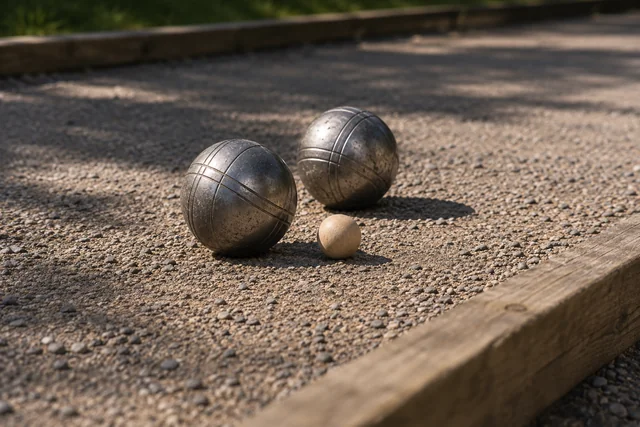
On a cool morning, a standing briefing can leave you ready to start the match but not yet ready to make your usual throw. Give yourself time to move before asking for a first attempt. Check where trial throws are allowed and let teammates know which part of the ground you are using. You can do most of the preparation even when the pistes are occupied.
Start with comfortable movement
Walk around the area, gently move the joints you expect to use and see whether your shoes feel secure underfoot. Keep the movements easy, particularly if you have been sitting in a car. The NHS has a general warm-up routine you can adapt. If a joint hurts or you have a specific restriction, get guidance about movements that suit you.
Build up the throwing task
When practice is permitted, take a few comfortable throws at an uncomplicated target. Watch the first bounce and check that you can reset your stance. Only then extend the target or add an occasional shooting attempt if that is part of your role. Use the time to find your normal rhythm rather than trying to impress a waiting teammate.
Reset after a long interval
During a delayed start or a long wait between games, keep an extra layer handy and make time to move again before the next match. A short walk and a few easy movements may fit better than a full repeat of the warm-up. Rehearse the same sequence on an ordinary club evening. You will know how much time and room it takes before using it at an event.
Find somewhere suitable to move
Arrive early enough to check whether there is a path or open space you can use away from active play. You may be able to walk a short loop while the assigned pistes are still occupied. Check that your footwear and any layer you are wearing allow you to move comfortably. Use movements that fit your ability and the space, and follow advice you have been given about an injury or health condition. The general NHS warm-up examples give a starting point. Adjust them around what you need to do in a game and what the site allows.
Move into the parts of the game you will actually use
Pétanque includes time standing in one place, steps onto uneven surfaces and a repeated throwing movement. Try a comfortable version of those tasks before you try the hardest throw of the day. You might start with walking, then gentle movements of the ankles and shoulders, and then take time to settle your feet as you would in the circle. Keep the movements controlled and use a range that feels suitable. If something hurts or gives you concern, pause and get appropriate advice rather than using the warm-up to test how far you can push it.
Use a small number of purposeful throws
When trial throws are allowed, aim first at a clear, comfortable landing area. Take a few attempts at a manageable distance and watch whether you can get a useful picture of the first bounce. If the team expects you to shoot, add a short and safe version of that task when the target lane is free. Give yourself a way to finish after learning something useful. A warm-up that becomes an extended competitive drill can take time away from the actual match and change how you feel before you start.
Make the plan flexible in a busy venue
One player can use a path for easy movement while another is still checking in, then they can swap. If no practice lane is available, use the time to look at the ground and talk through the first scenarios without throwing. Do not move through a neighbouring piste to make time. Ask the event desk where practice is permitted and plan for a version that does not depend on a free lane. Keep things simple enough to use after a delay or a change of court.
Reset after a cold or lengthy wait
During a gap, change a damp layer if you can and move again before play resumes. A few minutes of comfortable movement may be enough to find your usual rhythm. If you used a particular visual cue before the first game, remind yourself of it. Match the second warm-up to how long you stood or sat and to the demands of the next play. A short change of activity can be more practical than trying to recreate a complete routine while the organisers are waiting for your team.
Write a short version for club nights
- Check where you can safely walk or make easy movements.
- Rehearse a comfortable stance and the movement you normally use.
- Try a few easy throws if space and rules permit it.
- Notice anything about the surface that changes your intended landing spot.
- Choose an easy reset for a gap before the first game.
The list works best when you have already used it in an ordinary setting rather than creating it during a competition. If one part is usually impractical at your club, replace it with something you can find time and space to do. Ask a coach if you want help deciding which movements connect most directly to your normal throw.
End the warm-up with a simple way to start. Tell your partner if the ground caught your first bounce or if you need an extra moment to settle. Then let the actual first end guide the next decision.