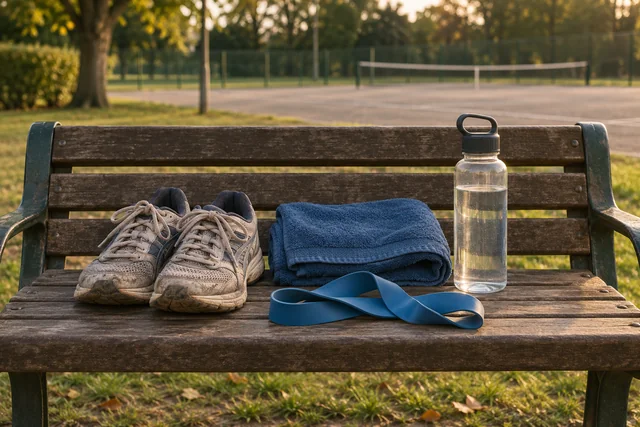
When qualifying finishes late, the most useful recovery plan may be a hot meal, a dry layer and a simple return journey. You can decide what would make the evening easier while there is still daylight and someone can pick up supplies. The aim is to turn up the next morning with the everyday jobs already sorted.
Check what tomorrow asks of you
Before leaving, confirm the next check-in time and venue. Ask where the organiser will post any changes. Put used clothing away, refill your bottle if you can and put your equipment back in the bag. Agree who will collect whom. If you are staying away from home, check when the accommodation serves breakfast or where you can get something familiar.
Make time to eat and wind down
Have a meal that you know you can manage after play. Include familiar carbohydrate foods, a protein source and a drink. If the journey is long, carry a practical snack rather than waiting until everything closes. Keep the last part of the evening simple. Give yourself time to wind down and set an alarm with enough margin to get ready without rushing.
Keep the next morning familiar
Use the same short warm-up you have used in practice. Resist making a large change to your food or equipment because yesterday went badly. Take your notes from the first session and choose one relevant observation about the piste. The archived La British Open listed Saturday qualifiers and Sunday competition. Use it to understand the shape of a two-day event, and use the current organiser’s pack for actual times.
Do a ten-minute handover before leaving
Finish the tasks that will be harder to reconstruct after dinner. Verify that the result has been submitted, photograph or note the official place to check the next draw, and agree who will message the team if the start changes. Record the entrance and expected lane location if finals use a different part of the grounds. At a two-day event, save tomorrow's meeting point as a place someone could find without mobile data.
Capture the one tactical observation you will use again. A short message such as “far lane is quick down the right edge and slows in the rake marks” gives the team something to verify in the morning. If you spent the final game arguing about a particular shot, leave the score reconstruction until another day. A handover with an end time frees everyone to get their bag and go.
Put food, travel and kit in order
Imagine qualifying ends at 7 pm and your room is an hour away. A reliable evening might start with a familiar snack and a drink before departure, a previously identified dinner option on the route, and a few minutes to set out tomorrow's clothing when you arrive. Check late opening and any dietary needs before making that plan. A teammate taking public transport can use the same idea by carrying a suitable spare snack and knowing which shops remain open.
Open the rain covers and let wet clothes and shoes air where permitted. Dry the tape measure, empty crumbs from the boule bag and put the licence or registration details where you will reach for them first. These practical jobs take little time while you can still remember what went wrong. Finding a dry pair of socks in the morning matters more than sorting old photos of the score sheet late into the evening.
Make the rooms and alarms work for you
Players sharing accommodation can coordinate lights, alarms and the bathroom before everyone gets tired. A simple arrangement is to pack quietly in the evening, set a departure time together and have only one person responsible for checking the official event channel. If noise from the venue is likely, choose a normal wind-down routine that you can use there and keep the essentials close at hand.
Think about the journey home as well as the morning start. A long wait in the cold after qualifying, or an unexpectedly late bus, may push dinner and bedtime back. Set a workable order for the remaining jobs and shorten discretionary tasks first. You can read a long fixture analysis after the tournament. A clear alarm and a realistic breakfast plan need attention tonight.
Start the next day with fresh observations
Check how you and your teammates feel before committing to roles. Usual stiffness after a full day may need a gentle start. New pain, swelling or trouble moving warrants taking a pause and getting appropriate advice, with the organiser told early if a change may affect the team's entry. If the lane has been groomed or the weather has changed overnight, make one observation about the current surface before putting yesterday's tactical note to work.
Agree what to do if a delayed finals draw creates another hour of waiting. Keep the kit together, identify somewhere comfortable to sit, and choose a sensible time to review the schedule again. Check if there are rules or venue limits on practice during the wait. A few purposeful, permitted warm-up throws near the new start are easier to manage than repeatedly opening up and packing the whole practice space.
Compare the plan with the actual timeline
After the event, write down the latest meal and the actual departure times, where the biggest wait happened and what you ended up borrowing. If there is one change worth making next time, give it a place in the team's shared note. Your next qualifying evening will still have surprises. A checklist built around a real finish time is easier to adapt than a detailed timetable drawn up without one.