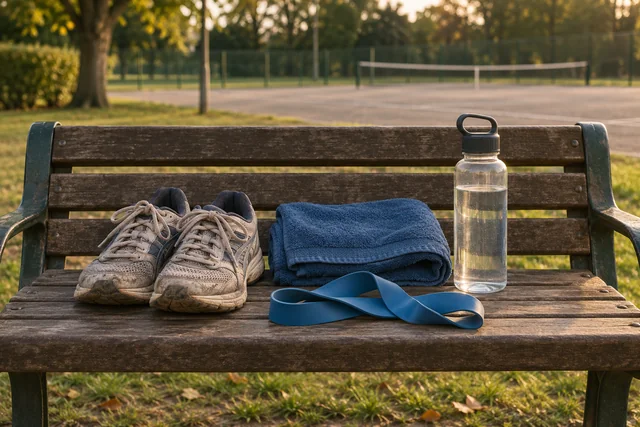
A mild morning can become a long afternoon in direct sun, especially on a ground with little shade. A tournament schedule may still shift, so decide what you will do when a match is delayed and there is nowhere cool beside the piste. Ask the organiser which areas are available for breaks and who to contact if conditions become difficult.
Make shade and water easy to reach
Look for shelter before play, carry water and plan time to refill. Light clothing and a hat can help you manage the day. When possible, take breaks somewhere cooler and avoid standing in the sun while waiting for your next assignment. Speak to the organiser if conditions are no longer manageable. Players with health conditions or medicines that affect heat tolerance can discuss their needs with a healthcare professional.
Pay attention to how your teammates feel
Headache, dizziness, nausea or heavy sweating in hot conditions can be signs of heat exhaustion. Stop play if you are worried about yourself or someone else, move to a cool place and follow the NHS advice on cooling and fluids. Call 999 if there are signs of heatstroke, such as confusion, a seizure or loss of consciousness. The NHS also gives emergency advice if someone remains unwell after cooling and drinking fluids.
Decide when to shorten or end the day
Tell the team before you start that it is okay to stop. Let the event desk know if changes are needed. A seat, a lift home or a substitute may need arranging while everyone is still in one place. Afterwards, note what made the situation harder, such as a long wait without shade, and put that information into your next venue checklist.
Walk the route you will actually use
An open piste with one tree can look manageable during an early registration. By the second round the tree may shade a boundary instead of the sitting area and the nearest refill may be a long walk from your assigned lane. Before the draw, find the route from the lanes to a reliably cool place. Ask whether a clubhouse will stay open and whether the toilet and drinking-water routes have any barriers. A teammate who uses a walking aid or tires easily benefits from knowing where they can stop between the lane and the building.
For a club practice you can choose a cooler time or shorten the visit before anyone travels. Ask the organiser at a competition how changes to the timetable will be announced and where people should report a welfare concern. One team member can keep an eye on the announcements while others sit in cover. Check the forecast and local alerts again on the morning because a plan made earlier in the week may underestimate conditions at the site.
Give breaks an owner and a place
In the rush to report scores, find the next lane and choose who goes first, everybody may believe somebody else has already suggested a break. Decide before play who will confirm the next start, where you will meet and where to refill bottles. If a person needs a cool rest, point out the place and offer to accompany them. The whole group can stay informed through a single person at the draw desk.
Choose a seated spot with shade that will still be useful as the sun moves. Keep the path around it clear for wheeled access and respect the organiser's rules about umbrellas and temporary shelters. Those small choices are especially valuable when there is no interval long enough to leave the venue. At practice, giving up the second training game can preserve the trip home and leaves space to try again in cooler conditions.
Plan for different needs in the same group
A player may have an individual care plan or medicine that affects what they do in hot weather. Let each person plan suitable fluids and breaks for themselves and give them an easy way to request help. Children, older people and people with long-term health conditions may be especially vulnerable. A comfortable captain cannot infer that the other people on the piste feel the same.
Ask ordinary questions privately if someone seems quieter or stops engaging. Are they steady on their feet? Do they want to sit somewhere cooler? Check again after a delay instead of relying on a single quick answer from a player who is keen to finish the match. At a public event, find the named first aider and a usable postcode or access gate in advance.
Recognise when somebody needs urgent help
Stop play if someone becomes dizzy, weak, sick or develops a headache in the heat. The NHS advises moving a person with possible heat exhaustion to a cool place, cooling their skin, giving fluids and staying with them. Use NHS 111 for urgent advice if you are struggling to help. Suspected heatstroke is an emergency. Call 999 immediately for signs such as confusion, loss of coordination, a seizure or loss of consciousness. Call 999 if they remain unwell after 30 minutes of cooling measures. Follow the call handler's instructions and have someone guide the ambulance team from the entrance.
Review the breaks after the last round
Write down which recovery area was accessible late in the day and how long it took people to get to water. If the most helpful change was holding the next briefing in the shade, tell the organiser so that it can become part of the next event plan. Before another hot session, give regulars and visitors the same short directions from the draw desk to water, shade and first aid.