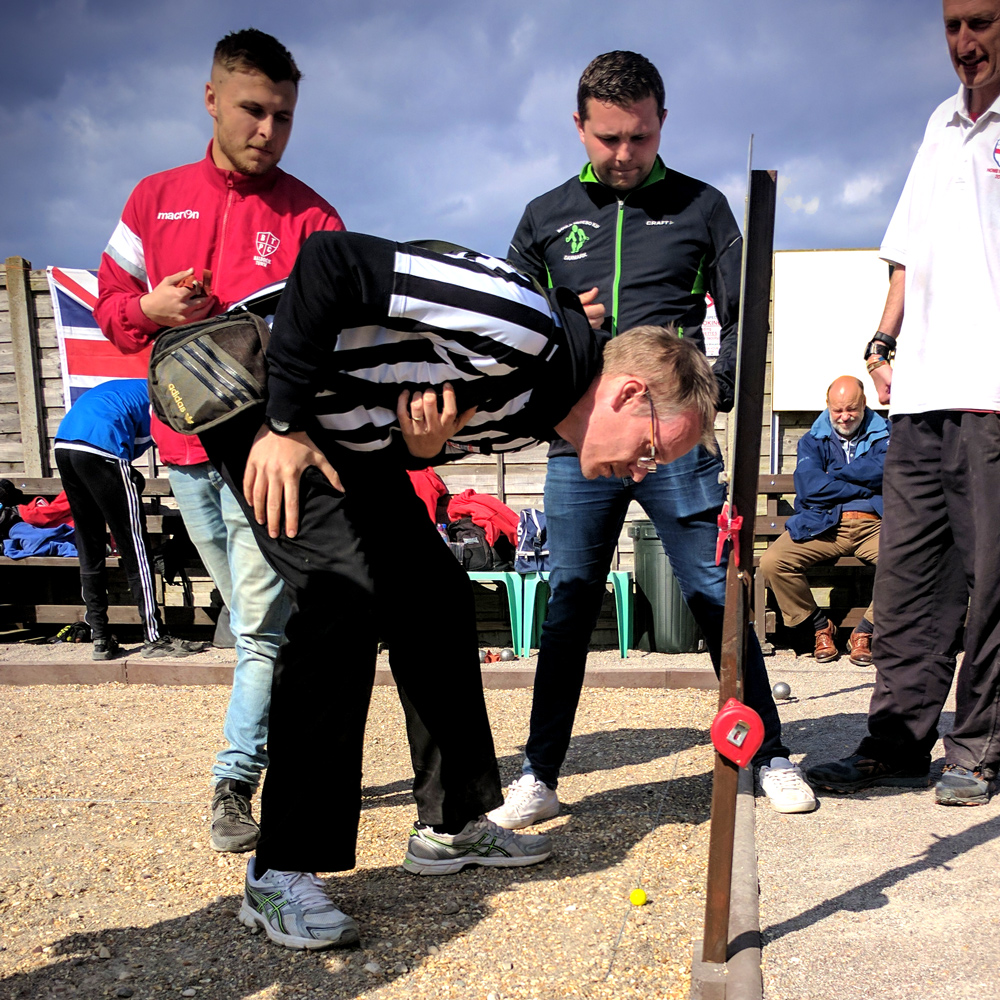
Tight ends are easier to settle when both teams agree on the process before anyone touches the boules. A close measure can change the choice of shot or the score. Pause the discussion as soon as the question is clear and give the person measuring room to work. Check the competition rules for who is entitled to measure and which tools to use.
Agree what needs comparing
Describe the two nearest boules or the scoring question you are trying to settle. Keep your feet and equipment clear of the jack and do not collect any boule until everyone has agreed the result. If you cannot approach without brushing another boule, wait and check the correct procedure. Estimate only where both sides can see the position plainly.
Keep the process observable
Use an appropriate measure and let an opponent see what is being compared. Avoid crowding the player with the measure or calling the outcome while the tool is still moving. If the decision is unclear or contested, request an umpire in line with the event procedure. A calm question about the measurement is more useful than a comment about a player’s honesty.
Rehearse it away from pressure
In practice, set two boules at nearly the same distance from the jack. Ask the players to explain their method and check whether the result is repeatable before scoring the end. Ask a club coach or qualified official to show you what to do with obstructed positions. Agree how your team will call for help at an event so nobody feels expected to guess.
Preserve the lie before anyone approaches
Ask players to leave the boules and jack in place while you establish what needs measuring. Stand back enough that there is room for the people involved to move without touching part of the end. Keep bags and loose equipment out of the way. If the situation is crowded or you cannot see both relevant boules from where you are standing, describe the question before trying to enter the gap. The official rules explain who should measure and what happens if something is displaced. Use the rules in force at your event and consult an umpire if something has already moved.
Choose a distance check that both teams can observe
Use the measure appropriate to the competition and the lie. A tape can be straightforward when there is room to hold it without brushing anything. A tighter position may call for a suitable tool or an umpire’s help. Keep steady contact or a clear reference as appropriate to the tool and avoid using a foot or leaving an item against the jack. Let the other side stand where they can check what you are measuring without getting in the way. If the route to the relevant area is unclear, wait for help rather than trying to force the tool into a gap.
Handle uncertainty without inventing a result
When the difference is too small to agree on immediately, say what is uncertain. For example, the end of the measure is difficult to see because another boule is in the way. An official can settle the measurement under the event rules. While waiting, leave the position in place and keep other players aware of what is happening. If a team needs to know the next action after an equal distance or a moved jack, ask for the rule that applies to the specific situation rather than arguing from memory about a previous match.
Notice when a measure changes a decision
In some ends you need to know which side currently holds the point before anyone can act. In others you are confirming how many boules score at the end. State which question you are asking. A measure of two leading boules can settle who is closer without telling you the final points. If the scoring limit is unclear after the first comparison, check each relevant boule carefully before collection. Once the result is agreed, tell the person reporting it and use the required scoring procedure for the competition.
Practise the process with a few realistic examples
- Set two boules at almost the same distance from a jack in open space. Let one person explain the comparison and the other observe.
- Repeat with an extra boule nearby. Discuss whether you can use a measure safely without disturbing the position.
- Add a second scoring question. Ask which distances you need to compare before anyone can agree the number of points.
- Stop a practice version partway through and have someone say how they would call an umpire when teams cannot agree.
Try these in a friendly setting where an experienced player can address questions. Make it clear who is watching and who is handling the tool. At a competition, the organiser or an umpire can explain the relevant procedure. Keep a club exercise separate from a formal decision.
Prepare the team before the next competition
Agree who will carry the measure and make sure it is in usable condition. Check that everyone knows where it is and how to ask for an official when needed. A brief call such as “hold the position while we check these two” can keep several people from talking at once. Afterwards, review the process only if there was an issue. The best improvement may be to clear more room, explain the question earlier or let the official come over sooner.
Respect for the measurement protects the effort both teams put into the end. Give it enough time to get an agreed result, then let the players continue or record the score without revisiting the whole argument.