The name of a club is rarely enough for a first visit. Find the entrance the organiser wants you to use. A postcode can lead to the wrong side of a sports ground, and a short walking route can include steps or loose gravel. Check details with the venue if a teammate uses a mobility aid, needs firm ground or cannot carry a heavy bag very far.
Check the last few minutes of the journey
Look for the exact gate and the route from a stop, station or car park. Ask about drop-off points and where to leave the car if the nearest spaces are full. Save the directions offline and send the entrance details to teammates. For a public transport journey, check the return service as well as the outward one, because a late game can end after a quiet station’s usual departures.
Ask about access at the piste
Find out whether there is a continuous firm route from the entrance to registration, the pistes, seating and toilets. Ask what the terrain is like in wet weather. If there are several areas, check whether one is easier to reach. Agree where someone can put a chair or equipment without obstructing players or officials. Ask the event desk who can help if arrangements need to change on the day.
Walk the route when you arrive
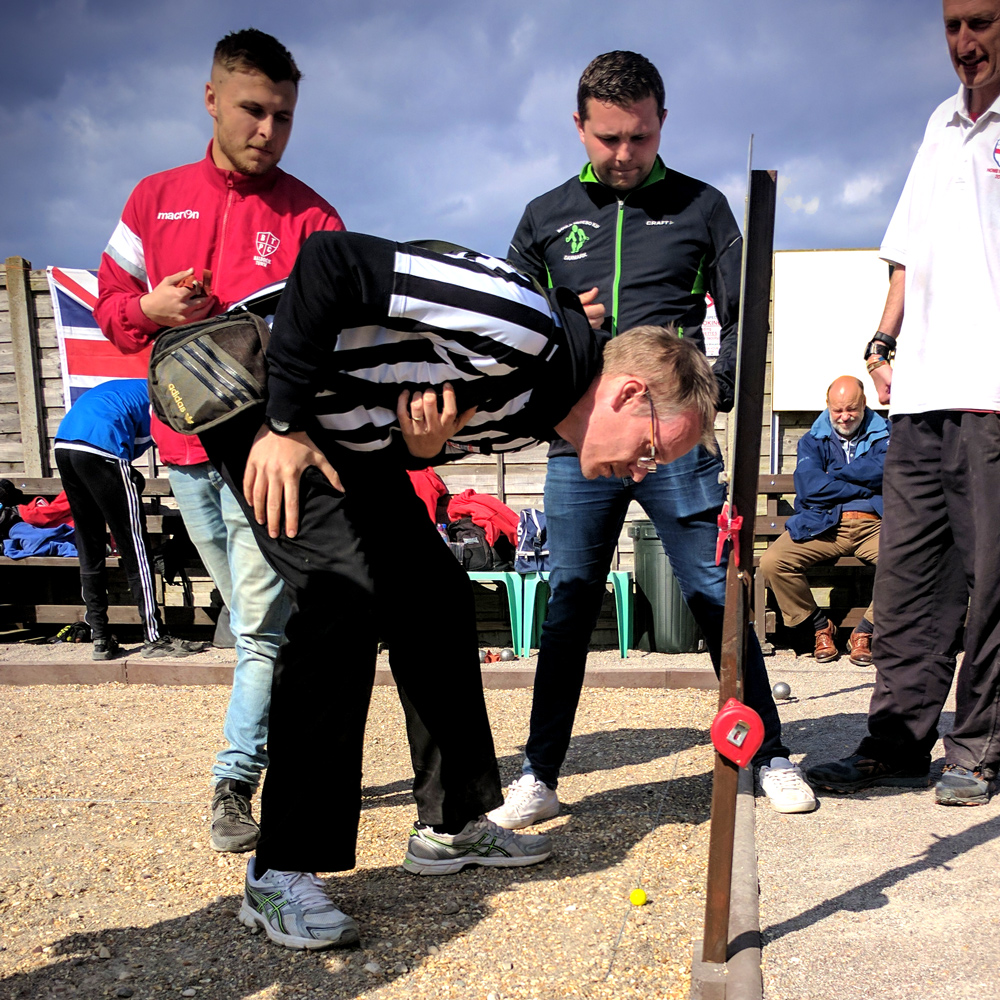
Locate the notice board and toilets before play. Tell the team where to meet in a break. The La British Open archive identifies Heckmondwike Pétanque Club as the venue for that edition and links to its location. Treat it as historical context. Confirm current access and transport information with the venue and event organiser before any trip.
Ask for the route in stages
A facility can be convenient at the gate and difficult nearer the playing area. Ask for the route from the actual entrance to the desk, the route from the desk to the pistes and access to a place to rest. A postcode or an online map pin does not answer whether the path includes a slope, a step or loose material. Give the venue a concrete question. You could ask whether there is a continuous firm path from the drop-off point to the main playing area after rain. You can then decide how the team needs to arrange its arrival.
Find the right person to answer
For an ordinary visit, the club may know its ground well. During a major event, the organiser may use a different gate, parking area or set of pistes. Ask which instructions apply to that date. If you are sent a general access page, ask about the part it does not explain. Give the organiser enough time to check rather than waiting until you are at the wrong gate. Keep a copy of directions they send, and share the same version with anyone meeting you.
Check travel details before committing to them
For a public transport trip, identify the stop nearest the entrance you will use and see when the return service runs. Estimate the walk without assuming it is flat, easy or well lit. For a car trip, look for a drop-off point, suitable parking and a fallback if that area is full. Decide who can carry equipment across a long route. A single heavy bag can be hard to move when someone needs to keep a hand free for a mobility aid. Split the load if the walk is part of the difficulty.
Make a short list for the ground itself
- An entrance and registration point you can find.
- A suitable way to reach the pistes that could be assigned.
- A seat or place to take a break near the play.
- A usable toilet and information about water or food facilities.
- A contact who can explain arrangements once the event is under way.
If a teammate needs any of those to be accessible, describe the actual requirement rather than asking only whether the club is accessible. Do not assume one answer fits everyone. Some people can manage a short gravel stretch but need somewhere to sit. Others may need a firm route everywhere they are expected to go. Discuss the details directly with the people affected.
Build a backup for a change of piste
At a large event, the assigned area may be different from the one you planned to use first. Ask during check-in whether there are differences between the playing areas and what to do if an assignment presents an access problem. Early information gives the event team more time to respond. Do not wait until play has started to mention a route you cannot use. Agree a place to meet if travel splits the team.
Use old venue information carefully
The archived La British Open page names a club and links to a location. It is helpful for understanding the setting of that edition, but it cannot confirm which entrance, transport routes or facilities will be in use at a later event. Check current instructions with the venue and organiser. If you find a difference, share the newer detail with the team. After the visit, make a note of where the route actually became difficult. A specific detail about a wet gravel slope or a crowded turn helps you ask a better question on the next trip.
Plan for the end of the day too. Confirm a safe way back to the car, station or collection point. Visiting the ground is easier when the team has already looked at both directions of the journey.